
Case study — paid social ads
Children's clothing
An online children's clothing store: pyjamas, vests, briefs, shorts, T-shirts and basic sets for girls and boys


Point A — what the client came with
The situation at the start
The store needed steady sales from advertising and a clear answer on which products were worth promoting.
At the start, advertising wasn't running as a system. Part of the budget was spent inefficiently, the creatives looked like the competition's, and shoppers didn't always understand why they should order here.
- Orders came in irregularly
- There was no clear advertising strategy
- It wasn't clear which product categories to scale
- The creatives didn't show the product's key benefits
- There wasn't enough testing of audiences, offers and formats
- There was no retargeting of people who had already shown interest
Process and analytics
Key growth levers
First we analysed what exactly the store sells, which categories have the most potential, and what drives the buyer's decision.
The main task was to build a clear system:
ad → site visit → add to cart → checkout → purchase.
- Test each product category separately rather than the whole range at once
- Make separate creatives and separate angles for each category
- Show not just the product but its benefit: fabric quality, comfort, everyday basics, sets
- Explain how easy ordering is and how clear the size range is
- Bring back people who visited the site or added to cart but didn't buy
- Move budget to the combinations that actually bring purchases
Process — how we worked
5 steps from zero to results
We broke the work into stages: from picking categories for the first test to scaling the combinations that actually bring purchases
-
1. Decided what exactly to promote
We didn't advertise the entire range at once. First we split products into categories and tested which responded best:
- pyjamas;
- children's underwear;
- basic sets;
- T-shirts and shorts.
-
2. Highlighted the product's benefits
In the ads we focused not on "children's clothing" as such, but on reasons to buy:
- quality fabric;
- comfort for the child;
- everyday essentials;
- ready-made sets and value bundles;
- easy ordering and a clear size range.
-
3. Prepared a range of creatives
For testing we used several formats:
- static banners;
- product collections;
- short video cuts;
- creatives built around one specific benefit: fabric, bundle, price, convenience, wardrobe basics.
-
4. Launched ads to different audiences
We split the advertising into several tracks:
- cold audience — to attract new buyers;
- retargeting — for people who had already interacted with the site or profile;
- repeat exposure for those who added to cart but didn't complete the purchase.
-
5. Scaled what worked
After the first results we started shifting budget to the best-performing categories, audiences and ad combinations. That gradually lowered the cost per purchase and raised ROAS.
Ad creatives
The creatives we ran
For each category we made several layouts with different angles — fabric, sizes, bundles, ease of ordering — and compared which one landed better.












Point B — results
Point B
AfterFinal results after 6 months
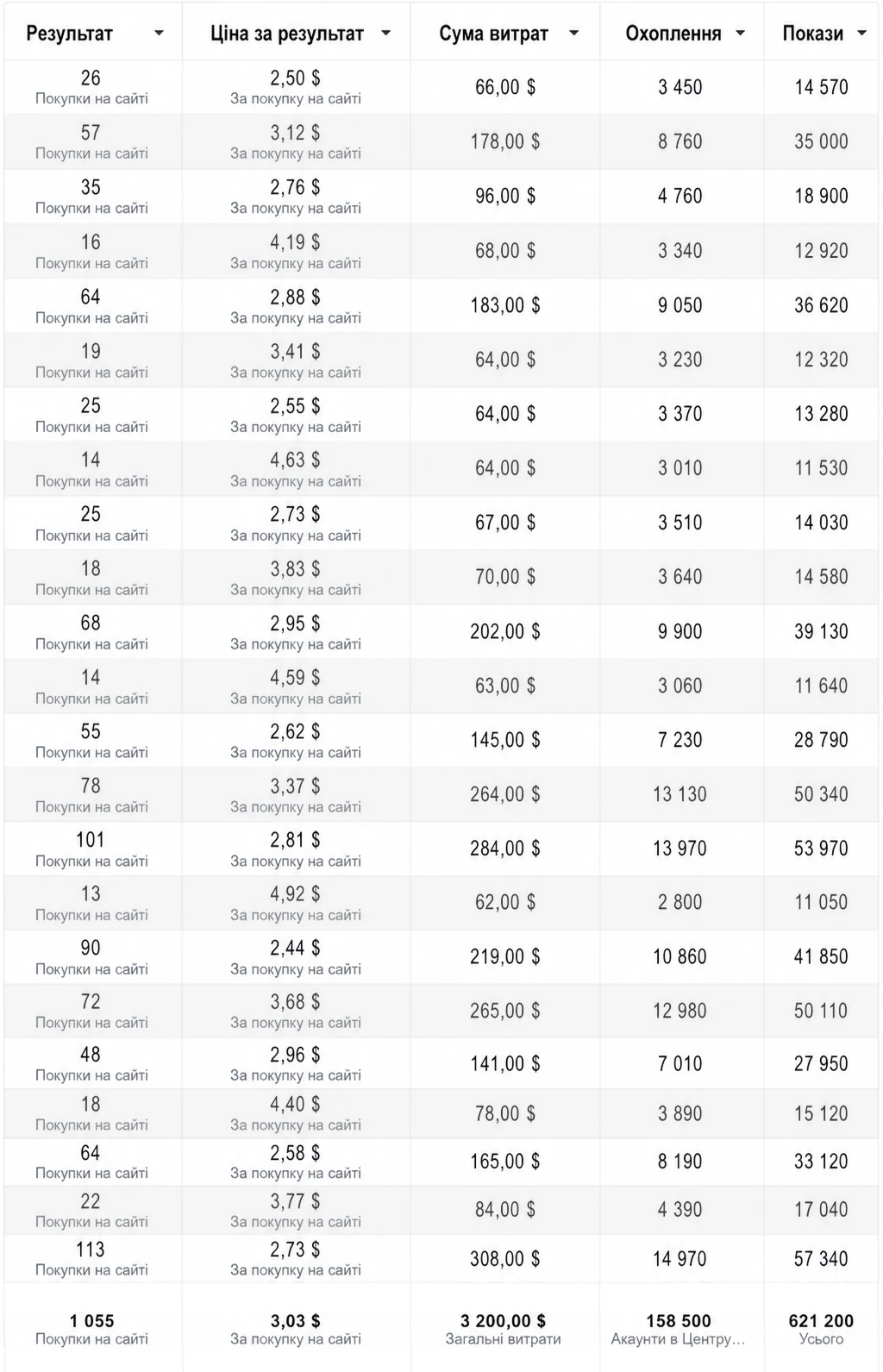
3 200$
ad spend
23 637
clicks to the site
3,80%
average CTR
0,14$
average CPC
1 055
purchases on site
3,03$
average cost per purchase
15$
average order value
15 825$
revenue from ads
4,95
average ROAS
Formats: static banners, product collections, short video cuts · Campaigns: cold audience + retargeting
Every dollar invested came back almost fivefold
Testimonial
What the client says
The store owner talks through how the work went — short, unscripted.
Want your online store to sell more consistently?
We'll run your ads so you can see which products work, where the budget goes and what actually drives purchases
Takeaways
What this project delivered
Advertising stopped being an experiment and became a predictable sales channel for the store.
In 6 months a $3,200 budget produced 1,055 purchases and $15,825 in revenue — a 4.95 ROAS. But the numbers matter less than the system behind them: it's clear which categories to scale, which creatives work and where to move budget.
Categories instead of "the whole range"
Each product group was tested separately, so it became visible what brings purchases and what just burns budget.
Ads optimised for purchases, not reach
Campaigns were optimised for on-site purchases, so the budget worked towards orders rather than views and clicks.
Retargeting pays the budget back
People who added to cart without buying came back through ads — those were the cheapest purchases in the project.
Get in touch